.jpg)

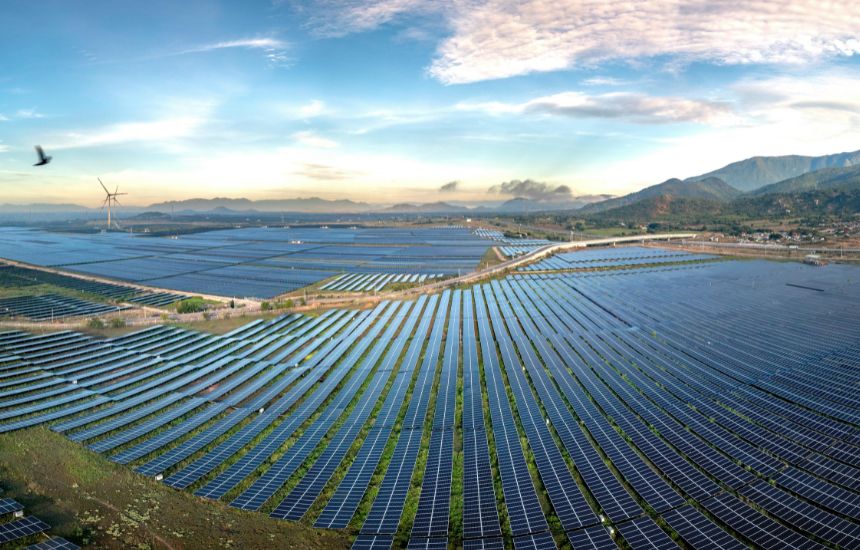
Industries across South Asia are rapidly shifting toward solar energy as a strategy to reduce operational costs and protect themselves from fuel price volatility and geopolitical risks. Rising electricity prices and uncertainty in global fuel supply have pushed manufacturers to explore renewable energy solutions, with solar power emerging as the most practical and cost-effective option.
In Pakistan, major industrial groups such as Fauji Cement Co. have installed large-scale rooftop solar systems at their plants. These installations are now supplying nearly one-quarter of their electricity needs at a significantly lower cost compared to grid power. The move has helped companies maintain stable production costs despite fluctuations in fuel prices.
India is witnessing a similar transformation, particularly in the textile and apparel sector where factories have large rooftop spaces ideal for solar installations. Companies such as Nishat Mills Ltd., Interloop Ltd., and Gokaldas Exports Ltd. are rapidly increasing their renewable energy usage. In some cases, their adoption of clean energy is matching or even exceeding levels seen in advanced economies. Falling solar panel prices, government incentives, and improved technology have made the transition faster and more affordable.
The shift toward solar energy has also reduced dependence on imported fuels such as liquefied natural gas. This has saved billions in import costs for countries in the region and provided industries with greater energy security. Stable power supply is especially important for export-driven sectors that must meet strict international deadlines and pricing standards.
However, not all countries in the region are moving at the same pace. Bangladesh, for example, has been slower in adopting renewable energy at the industrial level. As a result, its manufacturers remain more exposed to fuel shortages, supply disruptions, and rising electricity costs. This could affect the country’s competitiveness in global markets, particularly in garments and manufacturing exports.
Overall, the rapid adoption of solar energy is reshaping the industrial power mix across South Asia. Companies are not only cutting costs but also strengthening their resilience against global energy risks, making renewable power a key part of the region’s economic future.
.jpg)
.jpg)
.jpg)
.jpg)
-preview.webp)
-preview.webp)
-preview.webp)
-preview.webp)
-preview.webp)