.png)

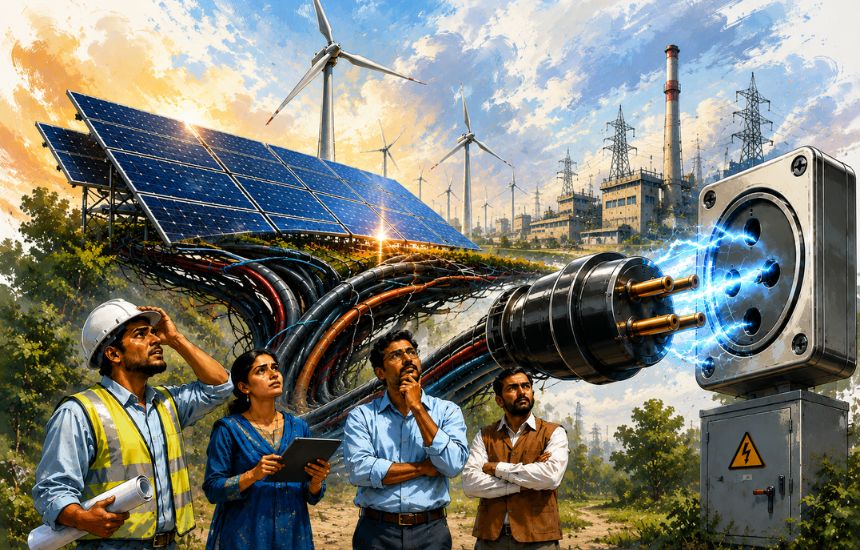
Industrial units across Gujarat are facing increased financial pressure as electricity distribution companies reportedly restrict power generated by captive open-access solar projects.
Industry representatives claim that approximately 20–50% of solar electricity generation is being curtailed during peak sunshine hours. In some cases, the level of curtailment is reported to be even higher, reducing the financial benefits expected from renewable energy investments.
As a result, the estimated payback period for industrial solar projects has reportedly increased from around six years to between 10 and 12 years. The longer recovery period is affecting project viability, increasing manufacturing costs and creating uncertainty for businesses that invested in solar power to reduce energy expenses.
Textile, spinning, salt manufacturing and other electricity-intensive industries say the unpredictable curtailment is disrupting debt repayments, operational planning and future investment decisions.
Industry associations have urged the Gujarat Electricity Regulatory Commission to intervene and develop a suitable framework to protect renewable energy investors. They argue that captive solar projects do not receive the same financial protections and compensation mechanisms available to conventional thermal power plants.
Meanwhile, Gujarat Urja Vikas Nigam Limited has stated that the state is investing approximately ₹95,000 crore in transmission infrastructure. Gujarat is also expanding battery energy storage and pumped-storage capacity to improve grid stability and support its target of achieving 100 GW of renewable energy capacity.
.png)
.png)
.png)
.png)
-preview.webp)
-preview.webp)
-preview.webp)
-preview.webp)
-preview.webp)