.jpg)


By Ar. Chhabi Yadav
As the world comes face to face with the realities of climate change, depleting natural resources, and rapid urbanisation, architecture stands at a critical juncture. The goal of design is no longer limited to creating visually appealing or structurally sound buildings. Today, architecture must evolve to meet environmental, social, and economic challenges.
Driving this transformation is sustainable architecture, a design philosophy that prioritizes environmental responsibility, resource efficiency, and the well-being of occupants. In the present time, it is not just a trend—it is the need of the hour. Sustainable architecture is becoming the foundation of a smarter, greener, and more resilient future.
As the world increasingly adopts sustainable architectural practices, India is also moving forward to align itself with global efforts to create healthier and environmentally responsible built environments.
Buildings are responsible for nearly 40% of global energy consumption and approximately 30% of greenhouse gas emissions, according to the International Energy Agency. Traditional construction methods often rely heavily on fossil fuels and generate large amounts of waste.
With rapid urbanisation across the world, the environmental footprint of the built environment is growing rapidly. Without sustainable interventions, this impact will continue to increase and pose serious threats to ecosystems and human health.
Sustainable architecture addresses this challenge by minimizing ecological impact while enhancing human well-being. It focuses on core principles such as:
Energy efficiency
Use of renewable resources
Waste minimization
Design of healthy indoor environments
These principles ensure that architecture remains environmentally responsible while also being economically viable and socially beneficial.
Sustainable architecture incorporates several innovative practices and technologies.
One of the most effective approaches is passive design, which uses natural elements such as sunlight, wind, and vegetation to regulate temperature and lighting inside buildings.
By strategically designing building orientation, openings, and ventilation systems, architects can reduce dependence on artificial heating, cooling, and lighting. These climate-responsive design strategies are increasingly being reintroduced into modern architectural practice.
Green roofs and vertical gardens are becoming increasingly popular, especially in dense urban environments. These living ecosystems provide multiple benefits:
In addition to environmental benefits, green roofs and walls enhance the aesthetic quality of buildings and provide much-needed green spaces within cities.
Material selection is another critical component of sustainable architecture. Architects increasingly prioritize renewable, recycled, and locally sourced materials.
Examples include:
Using materials with low embodied energy helps reduce the carbon footprint of buildings by minimizing the energy required for production and transportation.
India is also advancing toward sustainable development through policy initiatives and infrastructure projects.
The Green Building Policy introduced in 2006 and the Net Zero target for 2030 encourage energy-efficient construction and environmentally responsible development.
Certification systems such as LEED and GRIHA promote sustainable design by establishing measurable performance standards. Incentives such as tax benefits, lower interest rates, and additional Floor Area Ratio (FAR) are offered to encourage developers to adopt green building practices.
Several large-scale infrastructure projects in India demonstrate the successful integration of sustainable architecture.
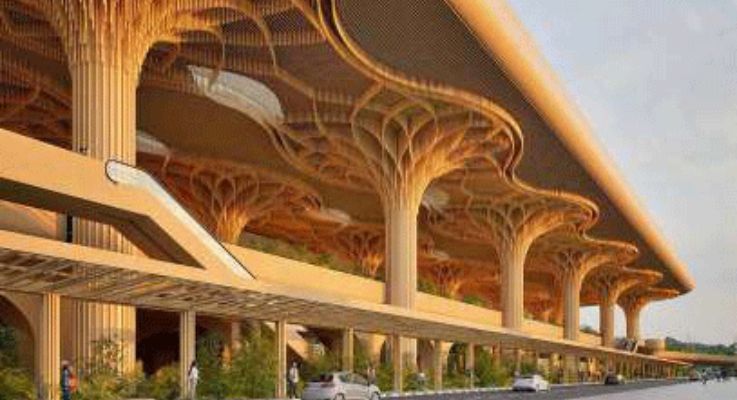
The newly developed Terminal 2 at Guwahati Airport received the International Architecture Award 2025 in the transport category.
Inspired by the biodiversity and culture of Assam, the design draws inspiration from bamboo structures and the foxtail orchid, reflecting the natural identity of Northeast India.
The building features organic forms, tree-like structural columns, and open spaces filled with greenery. The airport blends architecture with nature, creating an experience that resembles a biodiversity park rather than a conventional terminal.
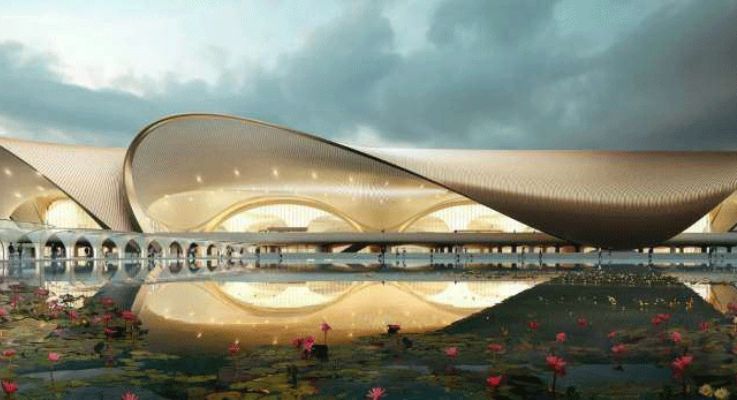
The Navi Mumbai International Airport, inaugurated in 2025, is designed as one of India's greenest aviation infrastructure projects.
The airport incorporates:
Its architecture, inspired by the lotus flower, was designed by Zaha Hadid Architects and features twelve sculptural pillars forming a floating lotus-like structure.
The project also aims to achieve Zero Waste to Landfill through the 5R waste management principle.
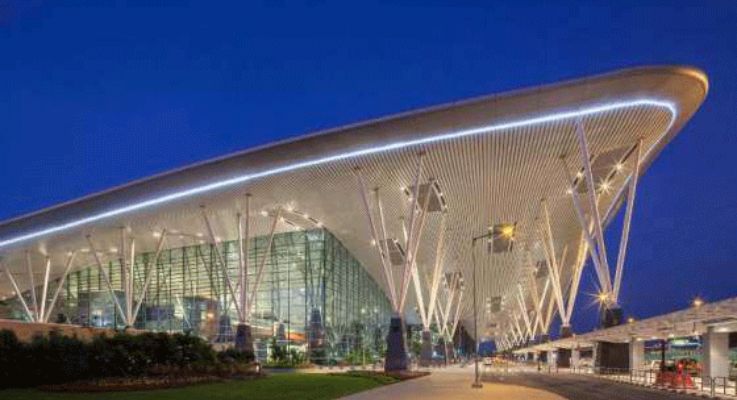
Terminal 2 at Kempegowda International Airport in Bengaluru represents a landmark in sustainable airport design.
The terminal integrates gardens, landscaped outdoor areas, and extensive greenery, creating what is described as a “terminal in a garden.”
The design uses local materials such as:
Large skylights allow natural daylight to illuminate interior spaces, reducing energy consumption while creating a comfortable environment for passengers.
Key sustainability features include:
As climate change continues to intensify, sustainable architecture is no longer optional—it is essential.
Educational institutions are incorporating sustainability into architecture and planning curricula. At the same time, international rating systems such as LEED, BREEAM, and WELL help standardize sustainable practices.
Despite growing awareness, several challenges remain in India, including:
Overcoming these challenges requires collaboration among architects, engineers, policymakers, and communities.
Sustainable architecture goes far beyond the design of buildings. It influences how people live, work, and interact with the environment.
By integrating environmental responsibility with innovative design, sustainable architecture supports the vision of Viksit Bharat—a developed and resilient nation built on sustainability and long-term growth.
As awareness of green building practices continues to grow, the future of architecture will be defined not only by form and function but also by its commitment to sustainability and ecological responsibility.
Creating a sustainable built environment today ensures a healthier and more resilient future for generations to come.
Name: Ar. Chhabi Yadav
Profession: Architect & Urban Planner
Qualification:
.jpg)

.jpg)

-preview.webp)
-preview.webp)
-preview.webp)
-preview.webp)
-preview.webp)