.png)

Ar. Anurag Khandelwal and Ar. Rujuta Chauhan
Founder / Senior Architect, Woodstyle, Agra, India
The global construction industry is at a turning point. It is responsible for nearly 40% of total carbon emissions and places significant pressure on natural resources. As climate change intensifies, architects and builders must move away from carbon-intensive materials and adopt building systems that support environmental sustainability.
Mass timber construction, using engineered wood products such as Cross-Laminated Timber (CLT) and Glued Laminated Timber (Glulam), has emerged as a practical and scalable solution that changes how buildings interact with the climate.
This article explores mass timber as a key material for climate action in the built environment. It examines its embodied carbon, structural performance, construction efficiency, and impact on occupant comfort and well-being.
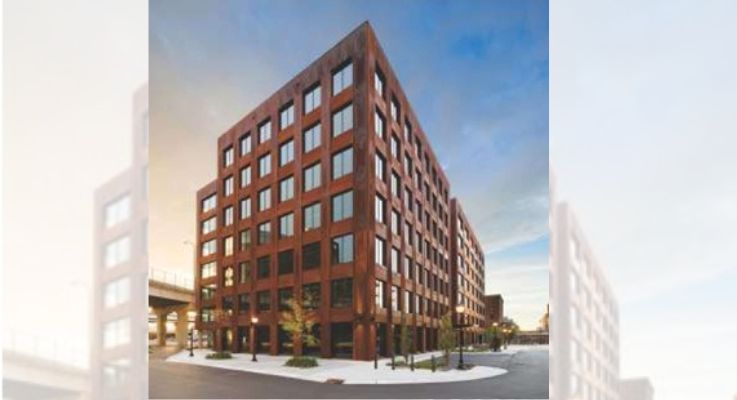
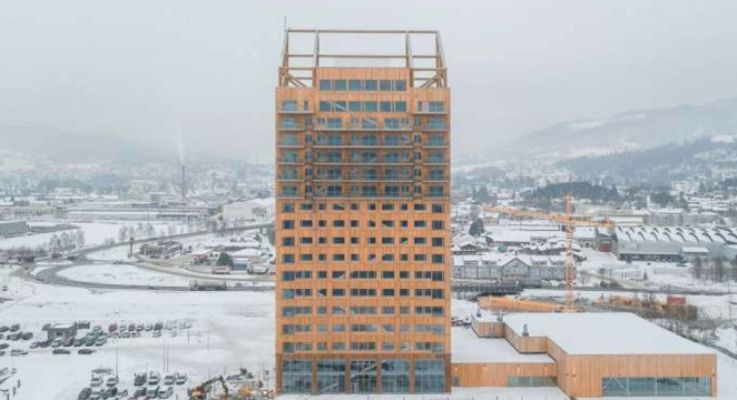
Through a comparison of two landmark projects — T3 Office Building in Minneapolis, USA and Mjøstårnet Tower in Brumunddal, Norway — the study demonstrates that mass timber can be successfully implemented across different building types and climates.
The findings indicate that mass timber buildings can reduce construction-related carbon emissions by 60–75% compared to conventional concrete and steel structures, while also storing carbon for the life of the building.
Although challenges remain — including higher initial costs, fire safety regulations, and limited supply chains in developing regions — mass timber shows strong potential for supporting net-negative carbon buildings.
With supportive policies, updated building codes, and integrated design approaches, mass timber can play a major role in creating climate-resilient, people-centered, and regenerative cities. Rather than simply being an alternative building material, mass timber represents a fundamental shift toward a more sustainable future for the built environment.
The built environment has become one of the most significant contributors to climate change, largely due to the extensive use of concrete and steel in construction. While these materials have enabled rapid urbanization and infrastructure growth, their environmental impact is becoming increasingly difficult to justify in a world facing climate instability.
Architects today are challenged to rethink not only how buildings are designed, but also what materials they are constructed from. In this context, mass timber represents a transformative solution.
Unlike conventional materials that emit carbon during production, timber naturally sequesters atmospheric carbon as trees grow. When sustainably harvested and transformed into engineered wood products, this carbon remains locked within the building structure for decades, effectively turning buildings into carbon storage systems.
Large-scale mass timber buildings around the world are challenging traditional assumptions about wood’s structural limitations. Projects such as the T3 Office Building and Mjøstårnet Tower demonstrate that timber can meet or even exceed expectations related to strength, durability, fire safety, and architectural expression.
These projects signal a future where construction actively contributes to climate mitigation rather than environmental degradation.
Mass timber buildings function as carbon vaults. Trees absorb carbon dioxide during growth, and when harvested and used as engineered timber products, they lock away approximately one ton of carbon per cubic meter of timber.
Manufacturing mass timber requires 70–80% less energy than steel production and produces up to 90% fewer greenhouse gas emissions than concrete, making it one of the most environmentally efficient construction materials.
Unlike steel or concrete, timber comes from forests that can be sustainably managed and regenerated, creating a continuous cycle of carbon absorption and material production.
Mass timber components are fabricated in controlled factory environments and assembled on-site. This reduces construction waste by up to 50% and accelerates project timelines by approximately 25%.
Exposed timber interiors create strong connections to nature. Natural wood textures reduce stress, improve cognitive performance, and create healthier living and working environments.
Large timber sections char predictably during fires, creating a protective outer layer that insulates the core structure and maintains structural integrity longer than many steel systems.
Engineered timber systems such as CLT and glulam provide high strength-to-weight ratios, allowing buildings to reach heights of 18 stories or more while maintaining excellent seismic performance.
Studies show that wood interiors reduce stress levels, lower blood pressure, and improve air quality, leading to higher productivity and improved occupant well-being.
Mass timber represents a powerful transformation in how the construction industry can respond to the climate crisis. Instead of merely reducing environmental damage, timber buildings can actively store carbon, support ecosystems, and create healthier indoor environments.
Case studies such as the T3 Office Building and Mjøstårnet Tower demonstrate that mass timber is no longer an experimental concept but a proven and scalable construction system suitable for various climates and building types.
Although challenges remain — including cost barriers, regulatory limitations, and supply chain development — increasing industry support and evolving building codes indicate a strong future for mass timber.
For architects and designers, choosing mass timber goes beyond technical performance. It represents an ethical commitment to environmental responsibility and future generations. Through thoughtful material choices and collaborative innovation, architects can help create cities that support climate action, social equity, and long-term resilience.
.png)
.jpg)
.jpg)
.jpg)
-preview.webp)
-preview.webp)
-preview.webp)
-preview.webp)
-preview.webp)