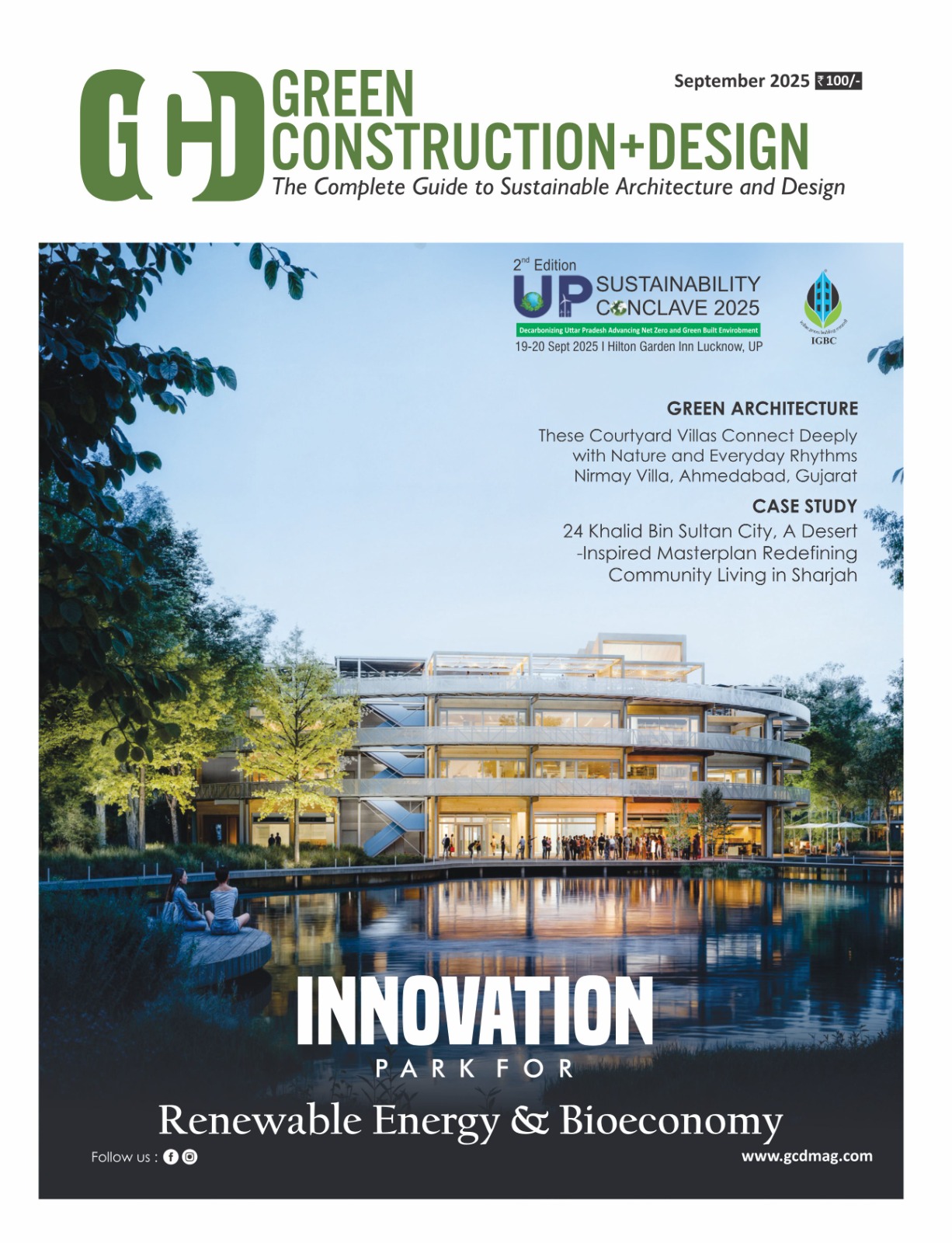
.png)




By Ar. Gaurav Gupta & Ar. Anamika Gupta
Architecture today stands at a critical point in history. Rapid urbanization, environmental challenges, and climate change are forcing architects and planners to rethink how buildings are designed and constructed. Traditional construction methods have often relied heavily on energy-intensive materials and processes, contributing significantly to global carbon emissions.
Sustainable design has emerged as a powerful response to these challenges. It focuses on minimizing environmental impact while improving the efficiency, comfort, and long-term performance of buildings. Rather than treating sustainability as an optional feature, modern architects are integrating sustainable principles into every stage of the design process.
Sustainable architecture emphasizes responsible use of natural resources, energy efficiency, and environmentally sensitive planning. By incorporating innovative technologies and design strategies, architects can create buildings that not only meet functional and aesthetic needs but also contribute positively to the environment.
Buildings account for a large portion of global energy consumption and greenhouse gas emissions. As cities continue to expand, the environmental impact of construction becomes increasingly significant.
Sustainable architecture aims to address these challenges through thoughtful planning and innovative design. It promotes strategies that reduce energy consumption, conserve water, and minimize waste. These practices help create buildings that are environmentally responsible while also providing healthier and more comfortable spaces for occupants.
Energy-efficient building envelopes, natural ventilation systems, and optimized daylighting are some of the key strategies used in sustainable architecture. These approaches reduce reliance on artificial lighting and mechanical cooling systems, thereby lowering energy consumption and operational costs.
Material selection plays a crucial role in sustainable design. Architects increasingly prefer materials that are renewable, recycled, or locally sourced. Such materials reduce the carbon footprint associated with transportation and manufacturing.
Examples of sustainable materials include bamboo, reclaimed wood, recycled steel, and low-carbon concrete. These materials not only reduce environmental impact but also provide durability and aesthetic appeal.
Another important aspect of sustainable construction is waste reduction. Efficient construction methods and prefabrication techniques help minimize material wastage and improve overall project efficiency.
Technology plays a vital role in advancing sustainable architecture. Smart building systems allow real-time monitoring and management of energy consumption, water usage, and indoor environmental conditions.
Solar panels, rainwater harvesting systems, and energy-efficient HVAC systems are increasingly integrated into modern buildings. These technologies enable buildings to operate more efficiently and reduce dependence on non-renewable energy sources.
Building information modeling (BIM) is another important tool that helps architects optimize building performance and reduce environmental impact during the design phase.
Sustainable architecture is not only about environmental performance but also about improving the quality of life for building occupants. Human-centered design focuses on creating spaces that promote physical comfort, mental well-being, and productivity.
Access to natural light, good indoor air quality, and connection with nature are essential elements of sustainable buildings. Biophilic design principles, which incorporate natural elements such as plants, water, and natural materials, have been shown to reduce stress and improve overall well-being.
The future of architecture lies in sustainable and responsible design practices. Governments, architects, engineers, and developers must work together to promote environmentally responsible construction.
Green building certifications such as LEED and GRIHA are encouraging the adoption of sustainable design strategies. These frameworks provide guidelines for improving building performance and reducing environmental impact.
Education and awareness also play a crucial role. Architecture schools and professional organizations are increasingly focusing on sustainability as a core aspect of design education.
Sustainable design represents a transformative shift in the way buildings are conceived and constructed. It challenges architects to think beyond aesthetics and functionality and consider the long-term impact of their work on the environment and society.
By embracing sustainable principles, architects can create buildings that are efficient, resilient, and environmentally responsible. These efforts contribute to a more sustainable future where architecture plays a positive role in addressing global environmental challenges.
 | Ar. Gaurav Gupta in residential and commercial architecture projects. |
 | Ar. Anamika Gupta design with a focus on environmentally responsible development. |
.png)
.jpg)
.jpg)
.jpg)
-preview.webp)
-preview.webp)
-preview.webp)
-preview.webp)
-preview.webp)