.png)

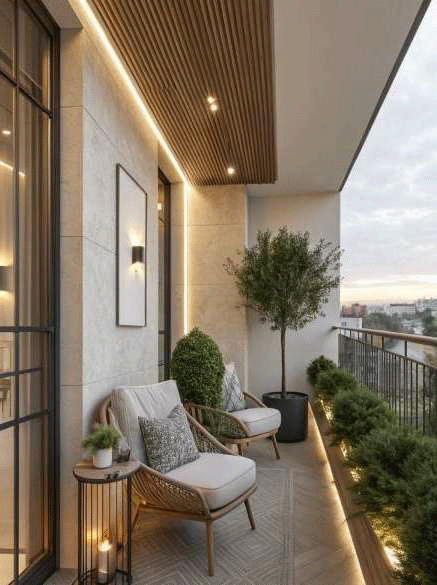
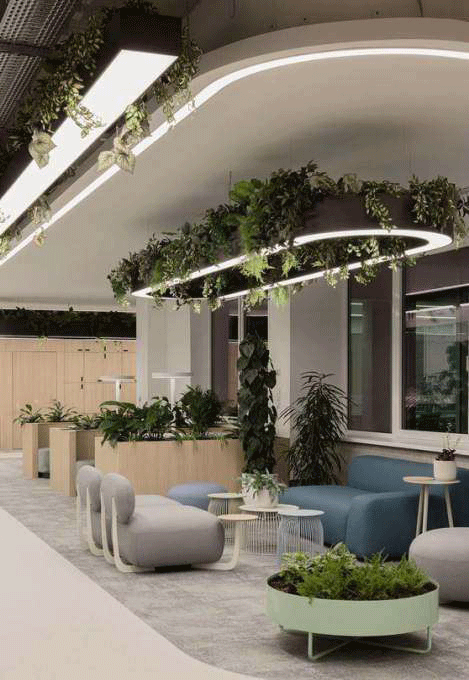
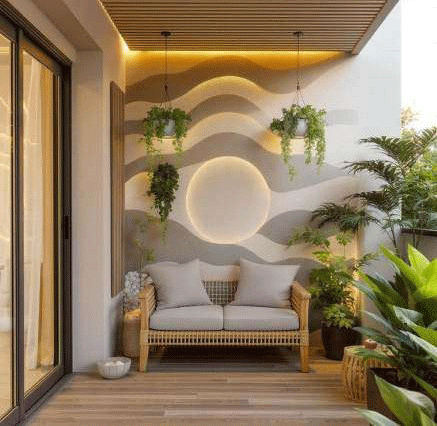
For decades, the debate about interior design was almost entirely focused on “the look.” Designers analyzed color palettes, furniture silhouettes, and the perfect placement of a statement rug. But as an interior designer in today's environment, priorities have evolved. The most beautiful settings are those that not only appear visually pleasing but also breathe, conserve resources, and protect the environment.
Green construction, once considered a specialized practice, has now become the foundation of modern high-end interior design. It bridges the gap between luxury living and long-term sustainability.
People spend nearly 90 percent of their time indoors. If the materials used in homes emit harmful substances, they become silent stressors that negatively impact health.
Many traditional paints, adhesives, and carpets contain Volatile Organic Compounds (VOCs). These compounds release harmful gases into indoor air. By choosing zero-VOC or low-VOC finishes, designers ensure that indoor air remains clean and safe.
Biophilic integration is another important element of green construction. Instead of simply removing toxins, it focuses on bringing natural elements into interior spaces. Living walls, natural lighting, indoor plants, and organic textures help reduce stress levels while improving productivity and wellbeing.
Sustainability should never mean sacrificing quality. Instead, it encourages the use of materials with a deeper story.
For example, reclaimed white oak or bamboo flooring reduces deforestation while adding unique character to a space. Countertops made from recycled glass or paper composite are environmentally responsible and extremely durable.
Innovative insulation materials such as recycled denim or sheep’s wool provide high thermal performance without the irritation or harmful effects of traditional fiberglass insulation.
A truly green interior works harder by reducing the load on heating and cooling systems. Energy efficiency is now integrated into the fundamental structure of interior spaces.
Smart window treatments can automatically adjust according to the sun’s position, helping maintain comfortable indoor temperatures while reducing cooling costs.
Thermal mass design strategies also play an important role. Installing stone or concrete flooring in sunlit areas helps naturally regulate indoor temperatures.
Lighting technology has also evolved significantly. Instead of simply replacing bulbs, designers now create layered lighting schemes using high-CRI LED systems that replicate natural daylight while using up to 75 percent less energy than traditional lighting.
True sustainability means designing interiors that can evolve and adapt over time. Spaces should be built so that their components can be disassembled, recycled, or composted instead of being discarded into landfills.
Using modular furniture, mechanical fasteners instead of permanent adhesives, and biodegradable textiles ensures that the beauty created today does not become tomorrow’s environmental burden.
Green construction is no longer an optional feature or a compromise. It is a thoughtful and sophisticated way of living. Designers today aim to create spaces that respect the planet while enhancing the lives of the people who inhabit them.
Name: Anjali Agrawal
Designation: Principal Designer
Company: Divine Designers
Anjali Agrawal is the founder and Principal Designer of Divine Designers, an interior design studio focused on creating refined, functional, and timeless spaces. She completed her Bachelor’s degree in Interior Design from BBD University, Lucknow in 2023.
Her portfolio includes luxury residences, banquet spaces, podcast studios, showrooms, and various bespoke commercial projects. Her design philosophy balances aesthetics, functionality, and craftsmanship to deliver interiors that are visually sophisticated and purposefully designed.
.png)
.jpg)
.jpg)
.jpg)
-preview.webp)
-preview.webp)
-preview.webp)
-preview.webp)
-preview.webp)